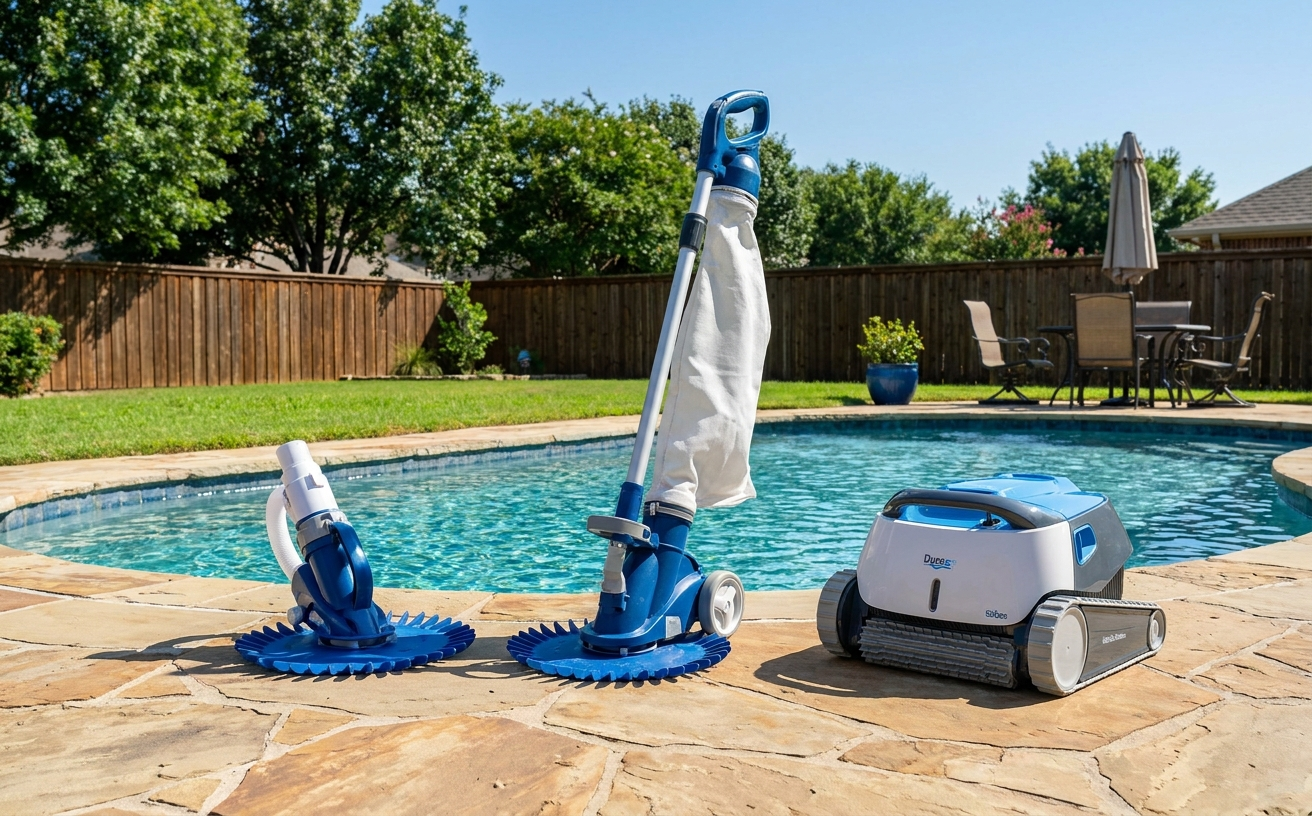
Three Ways to Automate Your Pool Cleaning (And Which One Fits Your Setup)
Manual vacuuming is the worst part of pool ownership. It eats up your weekend, it is tedious, and it never quite gets everything. So at some point, almost every pool owner starts looking for an automated solution.
The problem is that there are three fundamentally different types of automatic cleaners on the market, and choosing the wrong one for your pool can turn a convenience into a frustration. Each type connects to your pool differently, cleans differently, and has different requirements.
Understanding the trade-offs before you buy saves you from an expensive mismatch.
Suction-Side Cleaners: The Simple Option
Suction-side cleaners connect directly to your pool’s skimmer or a dedicated suction line. They use the suction from your main pump to move around the pool and pull debris into your filter system.
The biggest advantage is simplicity. There is no separate motor, no power cord, and no additional equipment to install. You attach the hose, drop the cleaner in, and turn on the pump. It runs whenever your pump runs.
The main downside is that suction-side cleaners add load to your filtration system. All the debris they collect goes through your pump and filter, which means more frequent filter cleaning and potentially shorter equipment life.
Best For
- Small to medium pools with moderate debris
- Owners who want the lowest upfront cost
- Pools with a dedicated suction line already installed
Pressure-Side Cleaners: The Powerful Option
Pressure-side cleaners use water pressure, rather than suction, to move and collect debris. They typically connect to a dedicated return line or a booster pump that creates the high-pressure flow they need.
These cleaners have their own debris bag, which means they do not send dirt through your filter system. This is a significant advantage for pools that collect a lot of leaves, twigs, or large debris. Your filter stays cleaner and your pump works less.
The trade-off is that most pressure-side cleaners require a booster pump, which adds to the installation cost and increases electricity consumption. They also tend to be louder than other types.
Having the automatic pool cleaner explained clearly helps you weigh the real cost of ownership, including electricity, maintenance, and replacement parts over several years.
Robotic Cleaners: The Independent Option
Robotic cleaners are completely self-contained. They have their own motor, pump, and filtration system. You plug them into a power outlet, drop them in the water, and they operate independently of your pool equipment.
Because they filter water through their own internal cartridges, robotic cleaners remove debris without putting any additional load on your pool pump or filter. This extends the life of your main equipment and reduces the frequency of filter maintenance.
They also tend to clean more thoroughly than suction or pressure models, especially on pool floors and waterlines. Many models climb walls and scrub surfaces with active brushes.
The Trade-Offs
- Higher upfront cost than suction or pressure-side models
- Requires removing from the pool and storing after each cycle
- Power cord must be managed to avoid tangling
- Internal filter needs cleaning after every use
Matching the Cleaner to Your Pool
The right choice depends on your specific situation. Consider these factors when deciding.
- Pool size and shape: large or irregular pools benefit most from robotic cleaners with smart navigation
- Debris type: heavy leaf loads favor pressure-side or robotic cleaners with their own debris bags
- Equipment capacity: older or undersized pumps may struggle with the added load of suction-side cleaners
- Budget: suction-side is cheapest upfront, robotic is cheapest to operate over time
- Time investment: robotic requires the least ongoing effort, suction-side requires the most filter maintenance
Installation Considerations
Suction-side cleaners need a functional skimmer or dedicated suction port. If your skimmer is already struggling to keep up with surface debris, adding a suction cleaner may reduce skimming efficiency.
Pressure-side cleaners need a dedicated return line or a booster pump. Installing a booster pump adds to the cost but provides the consistent pressure these cleaners need to operate effectively.
Robotic cleaners need only a power outlet within reach of the pool. No plumbing modifications, no additional pumps, no permanent installation. This makes them the easiest to add to an existing pool setup.
Running Costs Over a Season
Upfront price tells only part of the story. Operating costs vary significantly between the three types.
Suction-side cleaners run on your existing pump, so the only additional cost is slightly higher electricity from running the pump during cleaning cycles. But the extra load on your filter means more frequent cartridge replacements or backwashing.
Pressure-side cleaners with booster pumps add a noticeable amount to your electricity bill. The booster pump draws significant power during each cleaning cycle.
Robotic cleaners are surprisingly efficient. They draw relatively little power because their motors are small and designed for low-energy operation. The main ongoing cost is replacement filter cartridges, which are inexpensive.
Over three to five years, the total cost of ownership for all three types converges. The robotic cleaner costs more upfront but less to operate. The suction-side cleaner costs less upfront but more in filter maintenance and pump wear.
Choose based on what matters most to you: lower initial cost, less hands-on maintenance, or the best cleaning performance. There is no single right answer for every pool, but there is a right answer for yours.